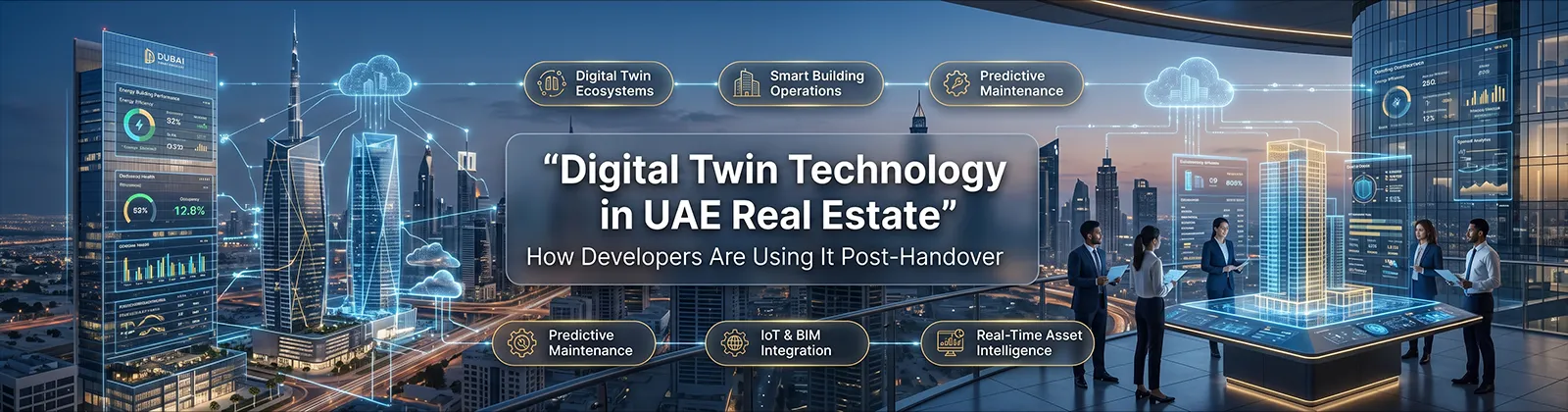
The architecture defining the United Arab Emirates isn't just changing in height but also improving in intelligence. The process of modernization in the construction industry across Dubai and Abu Dhabi involves a diminished reliance on traditional methods of construction by construction companies.
Instead, companies are paying more attention to smart buildings, smart infrastructure, and data-based operations. It is also important to say that in the process of modernization of the construction industry, Digital Twins technology has become one of the most effective tools at the disposal of construction companies that deal with construction projects.
The Digital Twin technology plays a prominent role not just in construction; it is assumed that Digital Twin technology settles down to work only when construction comes to an end that still this technology of modern age allows the team of specialists to minimize operating costs, prolong the life of the asset and control the building’s performance within years from the moment it was constructed. With the support of experienced BIM consultants such as Designheed UAE, developers can build digital twin ready models that ensure a lifetime value throughout the building lifecycle.
What is Digital Twin Technology?
A Digital Twin is a digital replica of an existing building that incorporates real-time data from its operations and is different from a static Building Information Model (BIM) used at the design stage. A Digital Twin has the capacity to keep updating itself with sensory data to notify stakeholders about how the building functions as opposed to how it should function.
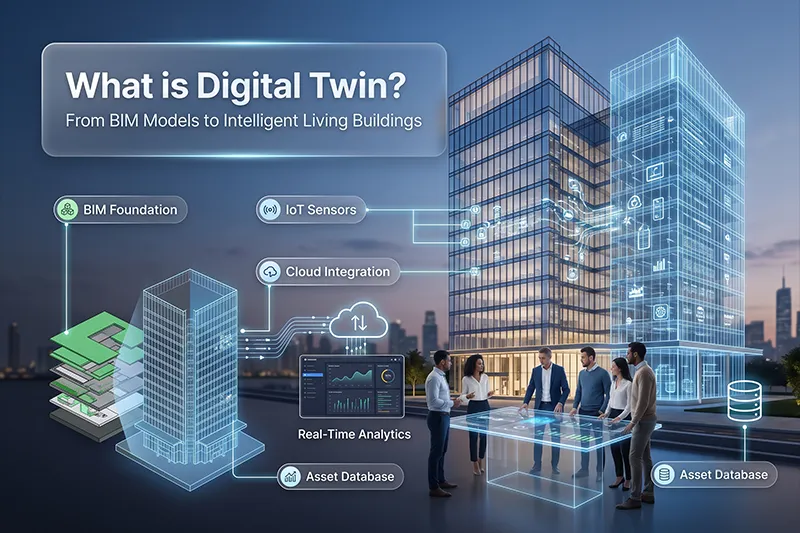
Building Information Modeling (BIM) supports the conception of a building, whereas a Digital Twin extends BIM functionality by utilizing the liveliness of data from the building during its operational stage. Digital Twin technology includes the following elements:
-
BIM Model – the geometric and data-rich foundation
-
IoT Sensors – capturing real-time conditions (temperature, occupancy, energy use)
-
Cloud Platform – hosting and syncing data
-
Analytics Dashboard – visualizing performance
-
Asset Database – storing equipment and maintenance records
The integration of the components listed above results in the establishment of the platform for managing buildings and optimizing their performance.
How Does a Digital Twin Work After Handover
Once the project has been finished, the BIM model is handed over to the owner or the facility management team. IoT devices installed throughout the building that are being activated can start collecting real-time data (for example, temperature, occupancy status, devices, and energy consumption statistics).
This information is synchronized and sent to Digital Twin software to monitor the building's performance and effectiveness. Predictive analytics help detect any potential equipment malfunction before any failure could occur, allowing the maintenance crew to take pre-emptive measures.
Why UAE Developments Are Investing in Digital Twin Technology
-
Smarter Facility Management - Digital twins ensure managers observe the performance of every building system and enable faster respond time and improve operations.
-
Lower Operational Costs - Continuous monitoring can help get rid of needless maintenance as well as downtimes and improve resource usage, which results in lower operational costs.
-
Preventive Maintenance - Digital twin technology allows users to use current performance data of the building instead of regularly planned inspections, to predict system failures before they occur.
-
Higher Energy Efficiency - With real-time monitoring of HVAC, lighting and electrical systems, Digital Twins make it easier to save energy resources and contribute to sustainability.
-
Better Occupant Experience - Indoor microclimatic parameters can be adjusted on a constant basis to improve comfort, safety, and satisfaction of tenants.
-
Longer Asset Lifespan - Predictive maintenance and performance enhancement increase building assets' longevity while reducing the system replacement costs.
-
Support for Smart City Initiatives by UAE - Digital Twin technology complements the Dubai 2040 Urban Master Plan and the UAE smart infrastructure vision through enabling smart, connected, and sustainable buildings.
Key Applications of Digital Twins in UAE Real Estate
Digital Twin technology is affecting several industries, including:
-
Commercial Towers
-
Residential Developments
-
Hotels and Tourism
-
Healthcare Institutions
-
Airports
-
Shopping Malls
-
Manufacturing Plants
-
Mixed-Use Properties
-
Data Centres
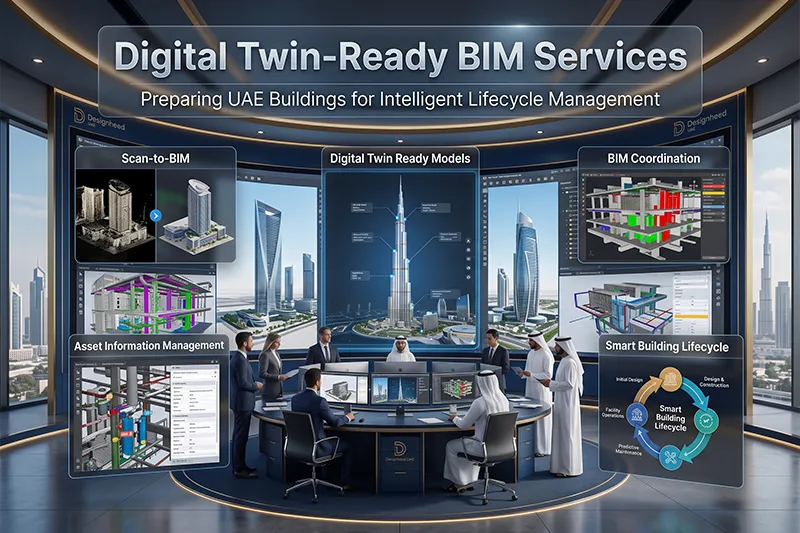
Through the assistance of Designheed UAE, property developers can begin utilizing Digital Twin ready BIM techniques for each project type.
Digital Twin vs Traditional Facility Management
|
Feature |
Traditional Facility Management |
Digital Twin |
|
Data Availability |
Static records |
Real-time data |
|
Maintenance Approach |
Reactive or scheduled |
Predictive |
|
Asset Monitoring |
Manual inspections |
Continuous Monitoring |
|
Energy Management |
Periodic analysis |
Live optimization |
|
Fault Detection |
After failures |
Early detection |
|
Reporting |
Manual reports |
Automated dashboards |
|
Decision Making |
Historical data |
Real-time insights |
|
Lifecycle Management |
Limited visibility |
Full lifecycle optimization |
Advantages of Digital Twins in Real Estate Development
Digital Twin technology creates tangible business advantages to the developers, helping them to:
-
Fix problems quickly Decrease maintenance costs
-
Enhance warranty management
-
Elevate tenant satisfaction
-
Achieve immediate building visibility
-
Keep the accurate asset documentation
-
Increase the value of real estate in the long-long run
-
Enable data-driven decision making
Using Designheed UAE's assistance in creating their BIM deliverables, architects reduce the chances of facing difficulty in implementing Digital Twin technology in the future.
Role of BIM in Creating a Digital Twin
BIM is a cornerstone of a successful Digital Twin. If there is no adequate BIM model, the operational data cannot be used to connect with the building objects. The essential BIM criteria include:
-
Well-designed as-built BIM models
-
Right LOD350 or LOD400 models
-
Full asset information
-
COBie-compliant data Integration with Facility Management system
-
Regular model updates throughout the whole lifetime of the building
Designheed UAE develops Digital Twin-ready BIM models that will make facility management easier after the completed project.
Technologies applied in the Digital Twin market
There are various technologies that contribute to the effectiveness of digital twin systems:
-
Autodesk Revit
-
Autodesk Construction Cloud
-
Navisworks
-
BIM 360
-
IoT sensors
-
Building Management Systems (BMS)
-
Cloud Computing
-
Artificial intelligence and Predictive Analytics
These technologies help in establishing an interconnected environment that facilitates monitoring, analysis, and optimization of the performance of buildings.
Issues with implementing a Digital Twin
The implementation of Digital Twin technologies is advantageous and beneficial, provided that advance planning is done correctly. The most frequently occurring problems include:
-
Incomplete BIM data
-
Poor asset data
-
High starting costs
-
Legacy system integration challenges
-
Cybersecurity worries
-
Difficulty managing data
-
Staff training issues
-
Ongoing model maintenance
It is advisable to work with experienced BIM designers like Designheed UAE so that all such issues can be resolved, and high-quality data can be ensured.
Why Do Developers in the UAE Collaborate with BIM Specialists?
The creation of a successful Digital Twin begins with the help of quality BIM products. Therefore, numerous developers decide to work with Designheed UAE due to the following successful services:
-
Accurate as-built BIM models
-
Digital Twin-ready asset data
-
BIM coordination
-
Scan-to-BIM services
-
LOD 350 and LOD 400 modeling
-
Faster project implementation
-
Cost-effective BIM delivery
-
Ongoing BIM support
By delegating BIM services to trained specialists, developers can speed up Digital Twin penetration and mitigate project risk.
Conclusion
Digital Twin advances BIM by allowing companies to use BIM’s value throughout the lifecycle of the building, including more efficient operations and predictive maintenance. With UAE developers embracing intelligent buildings and smart city projects, Digital Twins are becoming increasingly important for asset management. Collaborate with Designheed UAE to implement Digital Twin-ready BIM solutions for your real estate projects.
Questions People Frequently Ask
Q: What exactly is the concept of digital twin in real estate?
A: A digital twin refers to a building virtual duplicate which allows the owner to track its performance after the construction process is over.
Q: In what way does digital twin differ from BIM?
A: While BIM assists in the design and building process, digital twin applies the principles of BIM plus the live metrics of the building operation for its management.
Q: Why is it that real estate developers are using the digital twin technology in the UAE?
A: This technology allows the companies to lower their operating costs, make maintenance easier, consume less energy, and improve the customers’ experience.
Q: Can a digital twin be implemented for already existing buildings?
A: Yes, Scan-to-BIM technology can be applied to existing buildings with the help of loom sensors and updated asset data.
Q: Which industries can benefit from digital twin technology?
A: This technology can be used in such industries as commercial real estate, residential real estate, healthcare, hospitability, airports, retail, industrial facilities, and data centers.
Q: What is the role of BIM technology in digital twin development?
A: BIM technology keeps the reliable information about the building that is necessary for obtaining the