BIM Clash Detection Services in Dubai

Designheed UAE provides BIM Clash Detection Services in Dubai using BIM technology to identify clashes in the areas of architecture, structure, and MEP. Clash detection from BIM enables more effective coordination, reduces construction mistakes, less requirement for rework, efficient cost control, and seamless execution of the project, enable contractors, consultants, and developers achieve efficient workflows.

About Service

About BIM-Based Clash Detection for Coordinated, Construction-Ready Models
Architectural BIM

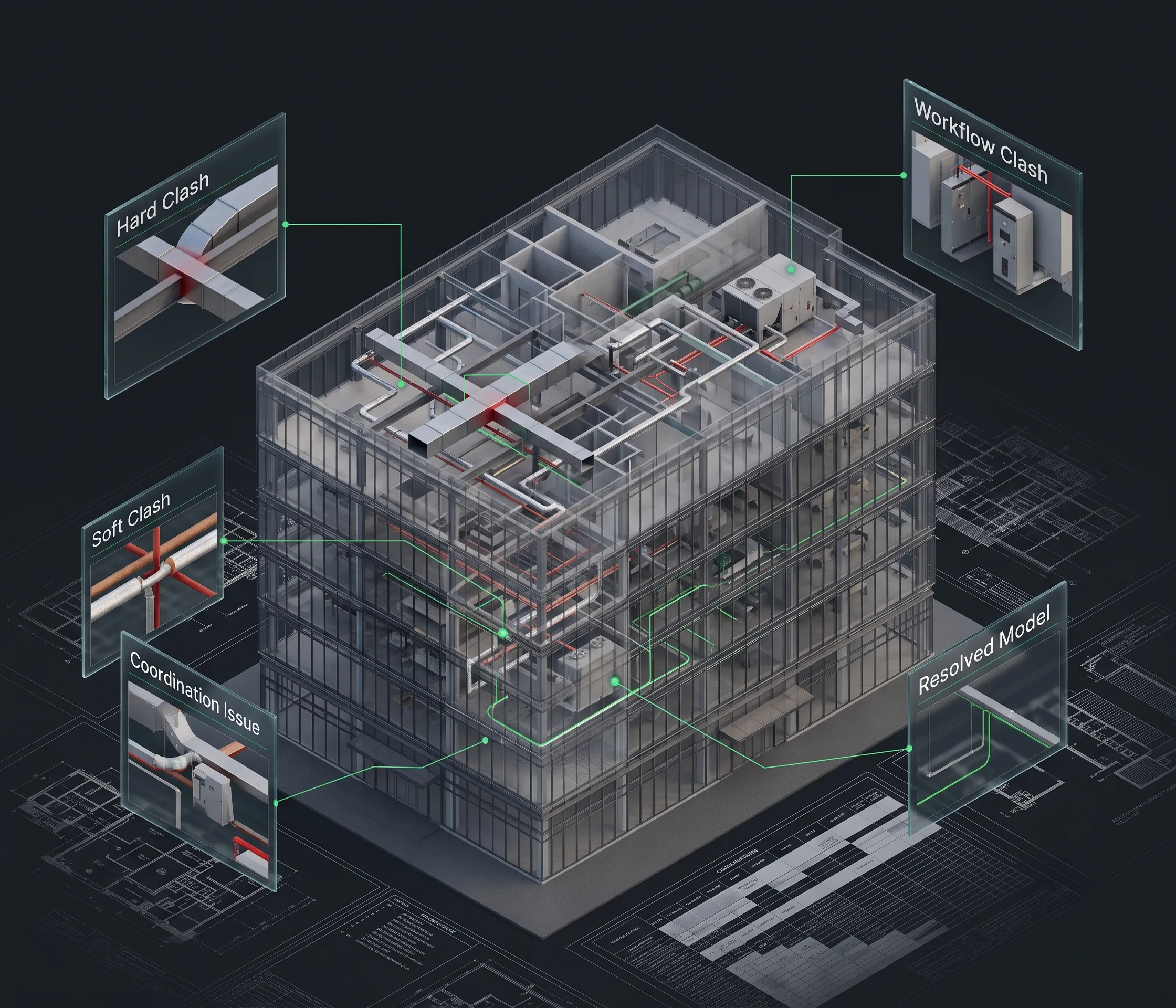
BIM clash detection can be described as digital coordination where issues between the architecture, the structure, and the MEP systems are examined before the actual construction commences. BIM clash detection allows for quicker detection of design problems, hence giving room for accurate work.

Using federated models, the BIM of coordination professionals can undertake the Federated Model Review (FMR) and multi-disciplinary clash detection, which allows them to reach their goal. When contrasted to conventional coordination, BIM helps to minimize further modifications, re-design expenses, and project delays.

Designheed UAE delivers sophisticated BIM CLash Detection Services based on the advanced features of Navisworks Clash Detection. We assist architects, contractors, consultants, and developers in attaining higher efficiency and speed in project execution.

Get a Free Quote

Developers Architects Consultants Contractors Project Management Companies Developers Architects Consultants Contractors Project Management Companies
Our Services

Our BIM Clash Detection Service

Designheed UAE offers a full range of BIM Clash Detection Services that help assess, identify, and resolve design clashes between disciplines. Utilizing intelligent BIM coordination processes and federated model reviewing, we assist architects, builders, consultants, and sector developers in making sure that their designs are both correct and practical with minimum mistakes made.

🏢

Architectural Clash Detection

Walls, ceilings, doors, floors, and other architectural components of clashes should be caught in order to allow architectural assistance of a federated BIM mode

📐

Structural Clash Detection

Identify potential clashes with beams, columns, slabs, foundations, and reinforcements to evade any problems in the context of construction planning and realization.

📡

MEP Clash Detection

Functional analysis of air conditioning ducts, as well as pipes, electrical appliances, and fire protection systems according to architectonic and structural solutions.

📄

Multi-Disciplinary (Federated Model) Coordination

Combine the models of architecture, structures, and MEP into a federated model for complete clash detection, examination, and coordination.

🔗

4D Sequencing & Workflow Clash Checks

Assess the construction sequences of activity and workflow processes to find scheduling clashes and enhance project timelines through BIM planning.

🔗

4D Sequencing & Workflow Clash Checks

Assess the construction sequences of activity and workflow processes to find scheduling clashes and enhance project timelines through BIM planning.

🔗

Clash Resolution & Model Coordination Support

Work together with the project team so that they can eliminate the clashes detected, modify the models, and ensure coordinated solutions that can be implemented in construction.

🔗

Structural Clash Detection

Identify potential clashes with beams, columns, slabs, foundations, and reinforcements to evade any problems in the context of construction planning and realization.

Our BIM Clash Detection Deliverables

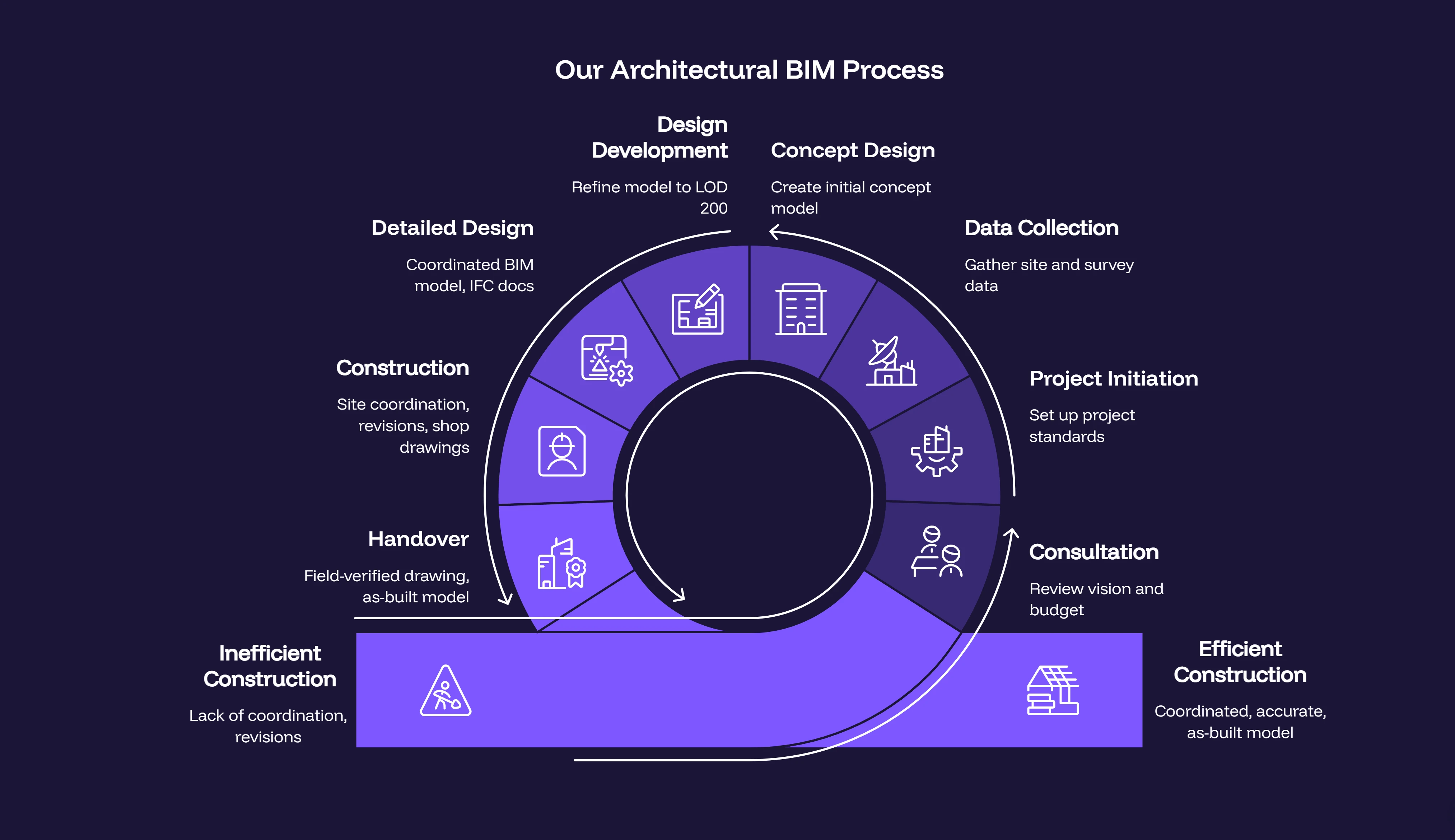
Architectural BIM Process

Software & Technologies

Revit Autodesk Revit
AutoCAD AutoCAD
Navisworks Navisworks
BIM 360 BIM 360
Autodesk Construction Cloud Autodesk Construction Cloud
Recap Pro Recap Pro
Dynamo Dynamo
IFC/OpenBIM IFC / OpenBIM

Benefits of BIM Clash Detection

Designheed UAE’s BIM Clash Detection Services can assist project teams with better coordination, less construction risks, and better efficiency in the whole project. Finding clashes before actual construction begins will allow using the BIM process for accurate planning, getting cost control, and ensuring collaboration between architects, engineers, builders, and consultants.

Reduced Rework and Design Modifications

Clash detection at an early stage helps to reduce changes in design, limit revisions, and keep true construction-ready BIM models.

Major Reduction in On-Site Conflicts

Identifying the clashes at the previous stage allows less problems in the field, that might influence implementation and installation processes.

Faster Construction Timelines

Improved coordination and pre-construction scheduling speed up the project process, enabling its timely completion.

Lower Labor and Material Costs

BIM clash detection lowers resources spending due to this increase in planning, coordination, and construction efficiency.

Reduced Material Waste

Precise modeling and clash resolution reduce material mistakes, extra replacements, and construction waste.

Compliance with Dubai Municipality / Trakhees BIM Mandate

Facilitates adherence to regulations through organized BIM documentation and project deliverables that are ready for submission.

Reliable Construction Documentation

Delivers correct BIM models, reports and records of coordination used for better documentation management on the project.

Enhanced Decision-Making

Gives visual insights and coordinates information for the speedy and correct decision-making process.

Get Expert BIM Clash Detection Services in Dubai

Get precise clash analysis, coordinated BIM models, and solutions that are ready for construction for successful project completion with Designheed UAE.

Talk to a BIM Expert Today Get Your Free Quote

Frequently Asked Questions

What are clash detection services?
What is the difference between hard, soft, and workflow (process) clashes?
Which software do you use for clash detection?
Do you provide clash detection reports and coordination support?
Can you coordinate clash detection across architectural, structural, and MEP disciplines?